ON THE HUNT WITH STUDENT STORM CHASERS
There are five stoplights along Route 116 in Pontiac, Illinois, and Alex Zielinski got stuck at every single one.
Normally, this wouldn’t be too much of a problem. This stretch of road, which slices through the middle of downtown Pontiac, is just over a mile long. Zielinski, however, was racing against time and nature. A mile north, a small tornado was on the ground.
“That was really bad timing,” Zielinski said. “We really did not have much of a choice but to go east so that we could stay on the storm, so we had to go through the town as fast as possible. We got kind of unlucky.”
Five other students were on the hunt alongside Zielinski on March 10. They’re part of a larger stormchasing community at the University of Illinois, but are among the closest student groups to this storm, if not the closest.
Through the brick buildings and trees that line the street, all Zielinski could see was a rotating funnel cloud. He and the chasers he’s with couldn’t see whether the tornado was on the ground.
Despite this, the group was hooting and hollering like a group of kids who had just awoke on Christmas morning to find the tree fully stocked with presents.
“I just remember being really, really excited in the car,” said Andrew Lapinskas. “I kept saying, ‘This is it, this is going to be the one.’”
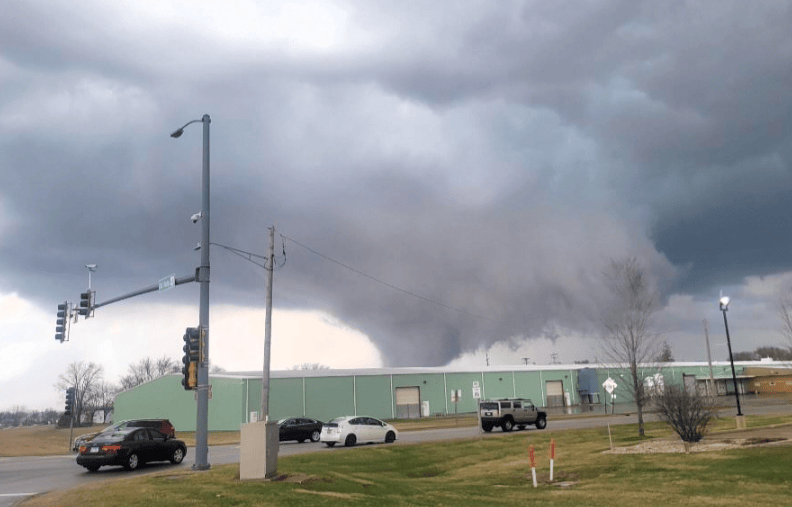
It turned out to be a lot of excitement over relatively little.
“We were kind of going crazy even though it only picked up a little bit of dust,” said Matthew Perry.
The tornado did a little more than that, causing some minor damage to a boathouse, garage and fence, according to the National Weather Service. Still, it earned just an EF-0 rating, the lowest on the Enhanced Fujita Scale, which is used to estimate tornado intensity.
After hitting all five green lights, the caravan finally made it through town, only to find that the tornado had lifted. They stopped, checked their radars, and figured the storm’s best chance of producing a tornado was already over.
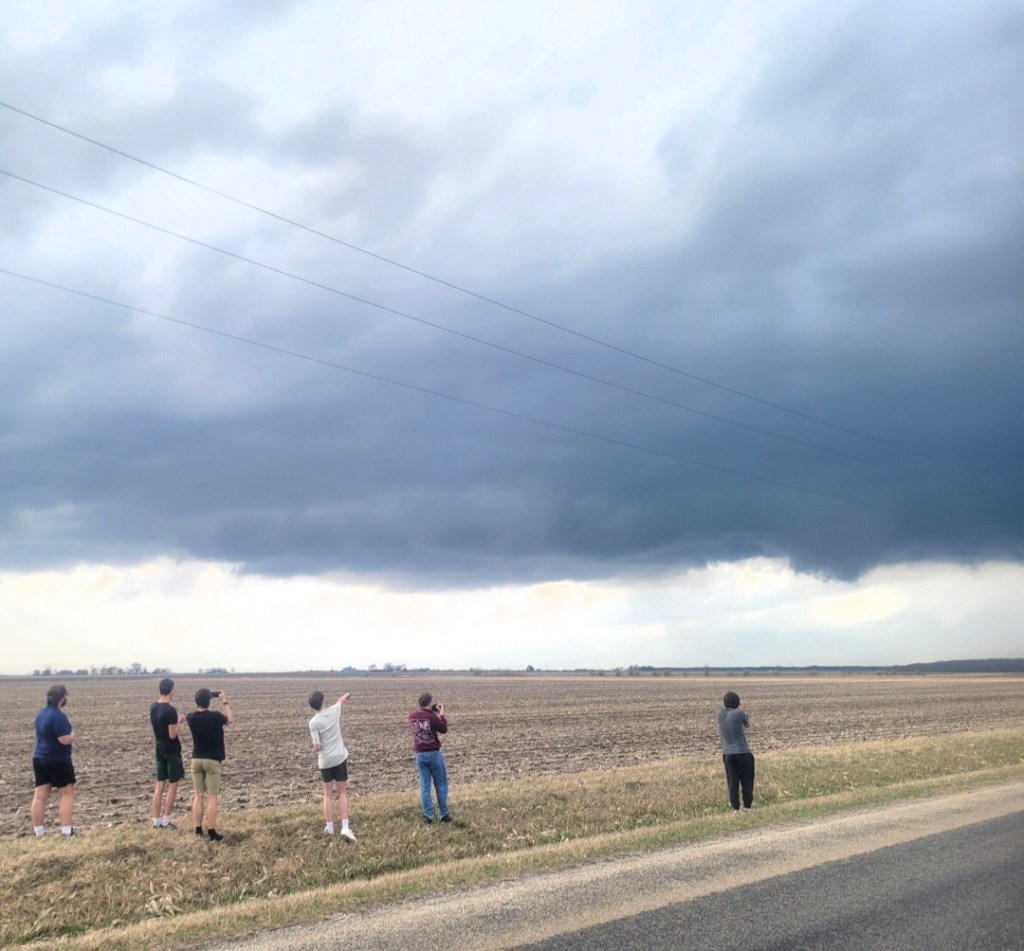
The group began to plot their next move alongside a barren field in eastern Livingston County. Despite it being their first chase as a collective, they managed to successfully hunt down a tornado, even if it was just an EF-0.
It was tough to tell that it was their first time chasing as a group, at least, based on their precision in catching the Pontiac tornado. Their love of the craft brought them together and allowed for some early success.
“We sit in class for four years, and we look at textbooks, and we look at hypotheticals, and we look at typical scenarios of what could happen, but watching it with everyone who’s so passionate about it, it’s not comparable to anything I’ve ever experienced,” said Matthew Perry.
That passion was evident in a litany of ways. Safety was paramount, of course, but so was having a good time. The group had a constant phone call connecting all three cars, providing quick and reliable communication. At the same time, it was flooded by a series of in-jokes and sarcastic quips.
“This has been what I have always wanted to do, and the fact that I can be in a place like U of I, I feel like I’ve won at life,” Zielinski said. “The fact that I’m here and with people like (the chasers) is basically my dream.”
That feeling of a fulfilled dream was common among the chasers. A few, including Lapinskas, said it was a goal of theirs to catch a glimpse of a tornado. He said he’ll never forget chasing with this group, and days like March 10th are a big reason why.
“It’s truly a once-in-a-lifetime experience,” Lapinskas said. “It’s not every day that you’re going to have weather setups like this, and to (chase) with people that have such common interests with you and have the same passion for what you’re looking at, it really fuels the excitement.”
The group also had designated radar-watchers and map-checkers, the latter of whom were tasked with guiding the group onto roads that both offered a good view and were easily escapable. A successful storm chase requires skill, luck, and thorough preparation.
“I like the strategy of it and the decision-making and the adrenaline,” said Adam Wittwer. “It’s very much strategy-driven. I do like that challenge.”
The chasers had fun, but were also prepared for the day. The fact that they were so close to the storm in Pontiac proved just that. By studying weather patterns for combined decades, they ended up in the same town as a visually impressive tornado.
No amount of preparation, or skill, or luck, or hope, or sarcastic comments could have readied them if they’d stuck with the storm they’d just abandoned.
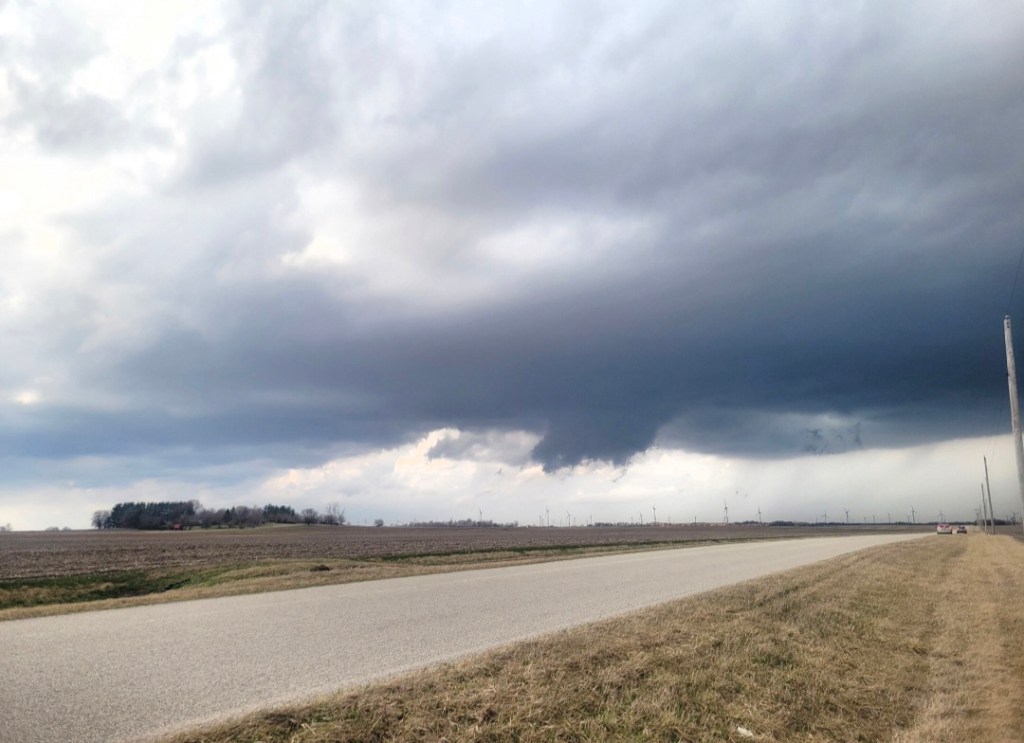
Tornadogenesis is a very delicate dance. The weather setup on March 10 had all of the ingredients necessary for an especially violent tornado to pop up somewhere in the state.
Wind shear is the key ingredient in the equation for tornado formation. It kicks off rotation within a storm that, if it turns vertical, could lead to a tornado. On the day of the chase, a strong warm front, the leading edge of a pocket of warm air, sat across most of the state. Fronts enhance wind shear, which can lead to more violent tornadoes.
In this case, that’s exactly what happened. The storm, after appearing to move away from the front, shifted to stay right along it. It produced a deadly EF-3 tornado in Kankakee County, which the group had abandoned in favor of catching later storms to the west.
Half of the group had never seen a tornado before. In the immediate aftermath, they expressed some regret about their decision to leave the storm.
Those thoughts of regret, however, quickly subsided once the group realized just how destructive the tornado was. Experienced storm chasers, drawn to the area by the day’s forecast, saw softball-sized hail destroy their windshields.
“As much experience as we might think we have storm chasing, it’s always different whenever you’re actually on the storm,” said Brady Nickols. “Safety is obviously our highest priority, so the decision to get off of it kind of was a blessing in disguise.”
The chase wasn’t close to finished, however. The warm front still sat waiting to charge another supercell. Another line of storms was rolling in, ready to dance. After missing out, the chasers were still unsatisfied.
“I think the fact that we kind of lost (that) storm motivated us to try another storm,” Koji Lemke said.
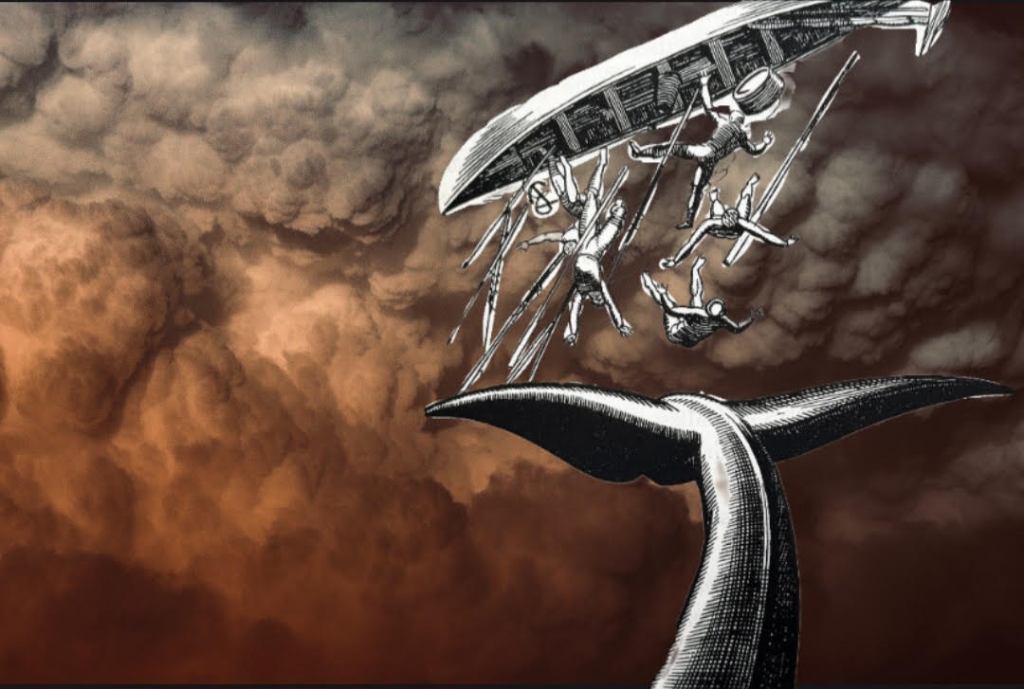
Like Captain Ahab after his white whale, they pressed on in search of their tornado.
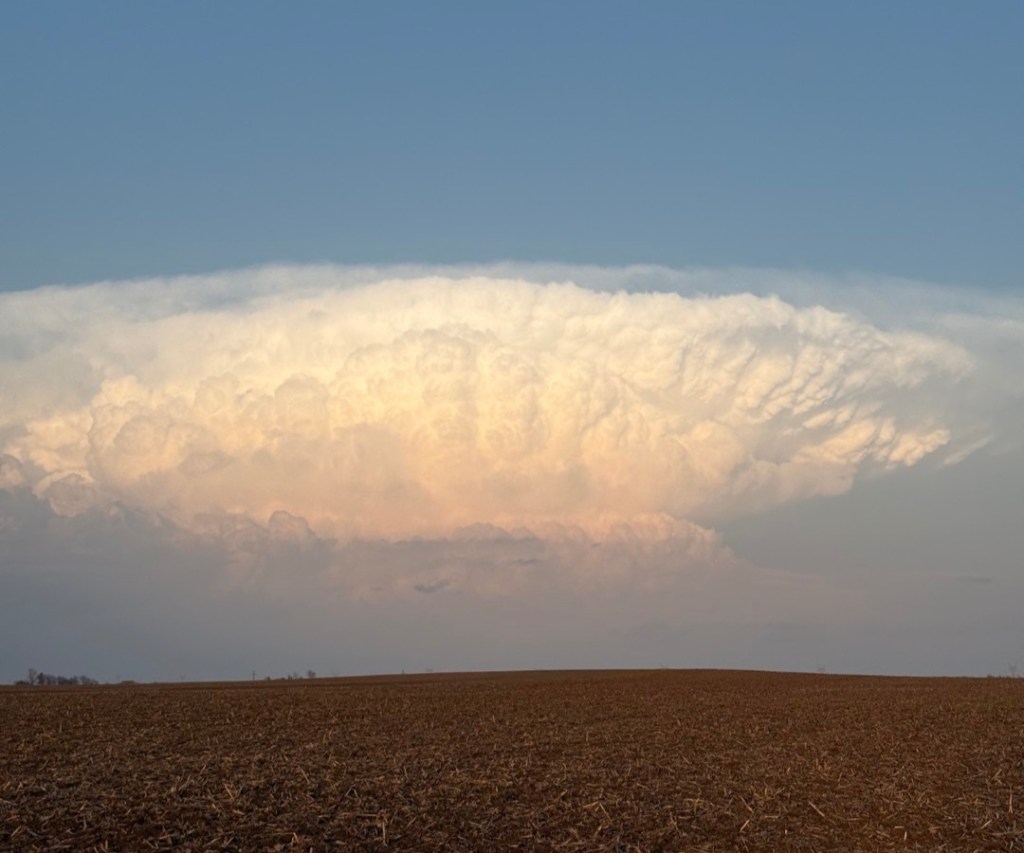
Jeff Frame has over 20 years of experience storm chasing. He teaches a course at Illinois — ATMS 324: Field Studies of Convection — that offers students the opportunity to see storms, including tornadoes, up close.
He has a few tips for newcomers to the field. They include being able to recognize storm structures, never chasing solo, and navigating without an online map. Frame’s most prudent advice, though — the one that he’s “Going to shout as loud as he can,” is to never chase after dark.
“That’s something that’s very, very dangerous and really shouldn’t be done, except for some of the most experienced folks out there,” Frame said.
It would be difficult to put together a group of six stormchasers with less experience than this one.
Nickols said he has chased more times than he can count. The other members, however, each have fewer than five chases under their belts. Still, they committed Frame’s cardinal sin of chasing and pressed on as the sun set.
“I think (Frame) would probably laugh at us for chasing at nighttime,” Nickols said. “But to each their own with storm chasing because we saw something that we thought was really cool, and we were able to stay pretty much completely safe.”
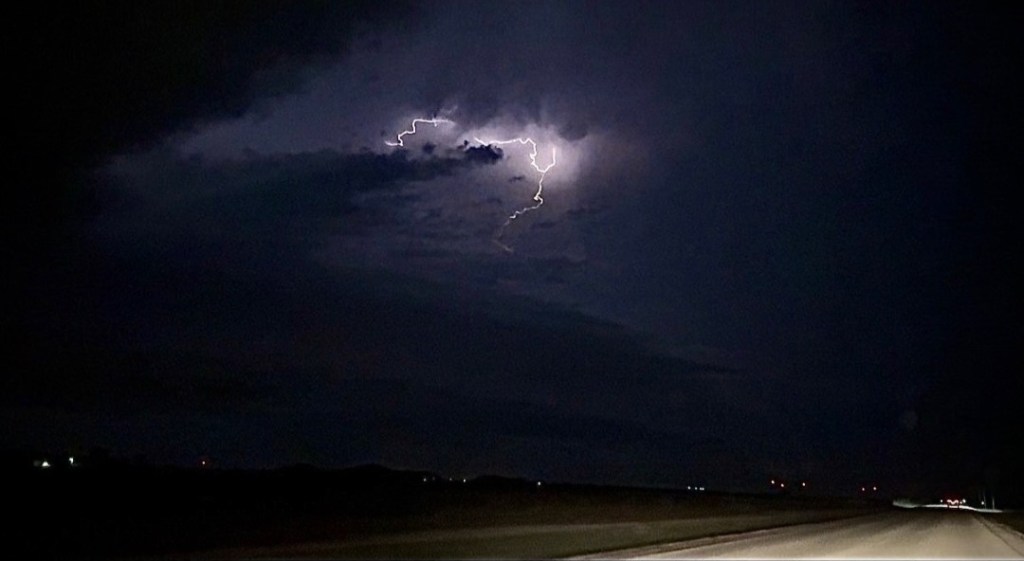
The scene driving north along I-39 was already a sight to behold. It looked like something out of a J.M.W. Turner painting. The last remaining vestiges of daylight yielded to a fantastic collection of cumulonimbus clouds illuminated only by a spectacular display of near-constant lightning.
Any potential tornado from here on out would be illuminated by the bolts alone.
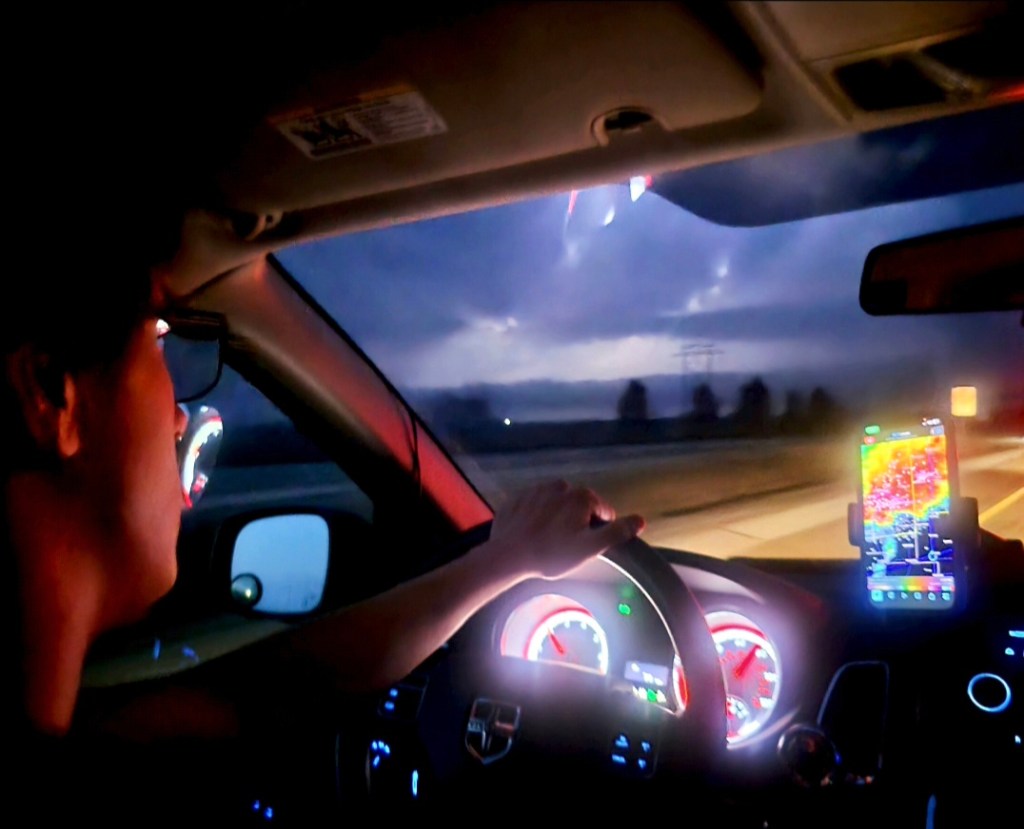
It was a promising storm. It possessed the necessary ingredients to produce a tornado, and with a little luck, they’d dance the Texas Two Step and generate a tornado. The NWS had already released a Tornado Warning for the area, indicating that a tornado was somewhere nearby.
“There’s a lot of lightning with this storm; it’s very energized, it’s right near the warm front. It’s got everything that it needs,” Lapinskas said. “And we see that tornado warning pop up, and so we decided that that’s going to be our storm.”
As with any chase, a little luck was necessary. When picking the day’s first storm, the group was among the first chasers on the supercell that eventually produced the Kankakee tornado, even if they started the day too far west and had to play catch-up. Maybe for them, lightning could strike twice.
The group got off of I-39 and darted west towards the Illinois River. With about 15 miles of separation, the storm was moving east at 40 MPH, while the cars were heading west at 60 MPH. They were trying to reach the north-south-running Route 89, which would allow them to get well below the oncoming storm.
Cracks began to show in the mission’s safety. The conversation between the three cars grew increasingly frantic:
“Should we take this county road right here?”
“No, I think we can get there.”
“Think or know?”
To which there is no definitive answer.
The Pequod pressed on.
After a series of stops and attempts to catch a glimpse of the elusive twister, the group grew antsy. The radar showed that there should be a tornado to the north, but they just couldn’t see it.
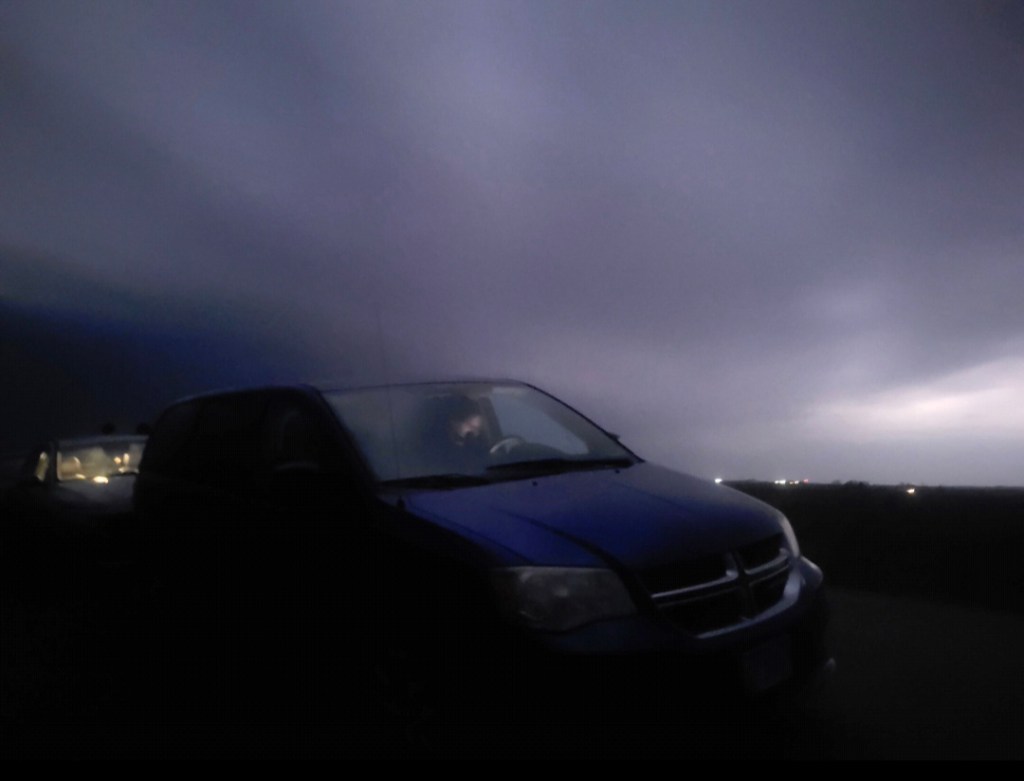
At their next stop, about three miles south of Toluca, they finally — barely — got a glimpse of their white whale through the darkness.
They lost their collective minds once again, throwing around a flurry of terms to describe what they were looking at.
“We just 0-metered!” Zielinski said.
They were, in fact, about 5,000 meters away.
“It’s a wedge!” Perry said.
A wedge tornado, one as wide as it is tall, is extremely destructive and violent. What they’re looking at turns out to be neither.
“We’re Pilger-ing right now!” Wittwer said.
A reference to a pair of EF-4 tornadoes that extended from the same storm near Pilger, Nebraska, in 2014. Again, a far more destructive, violent and uncommon scenario than what is currently unfolding.
“The cohort that I was with was very, very intelligent and knowledgeable,” Perry reiterated after the fact.
Ridiculous hyperboles aside, they all believed they were looking at a tornado. There was no doubt in their minds.
“There are also very few six-year-olds who doubt the existence of Santa Claus,” Frame said.
Months later, the NWS has not confirmed any tornadoes directly north of Toluca that night. The chasers took pictures and videos that appear to show something akin to a tornado, although several weather phenomena resemble twisters.
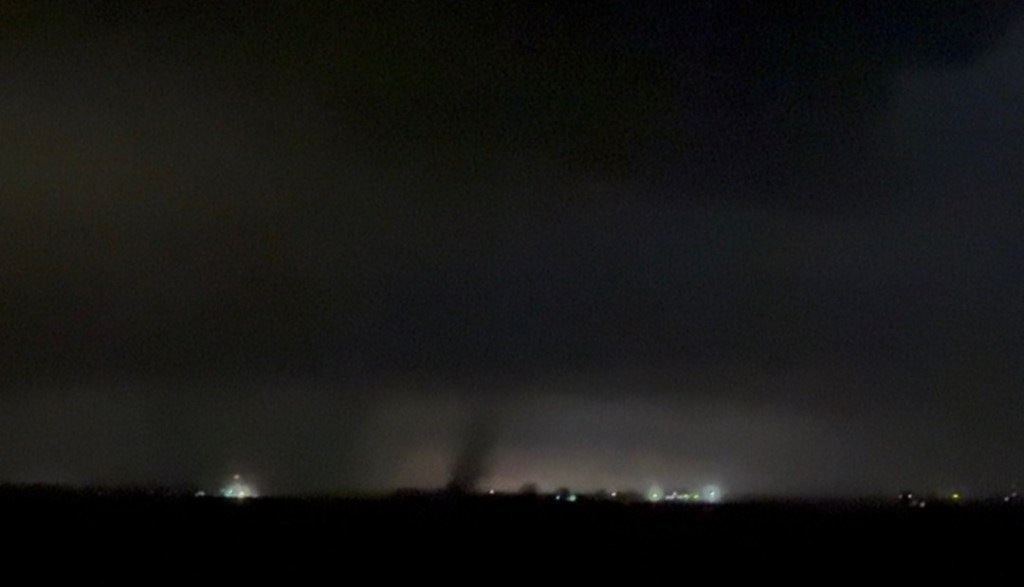
One possibility is an uncondensed tornado, a rotating column of air that lacks a completely visible funnel. They’re still capable of kicking up dust and causing minor damage, but are extremely tough to see, even during the day.
If it had just been a little bit lighter, conditions could’ve been right to just barely spot an EF-0 tornado that broke up just north of Varna within the timeframe that the group’s eyes were glued north.
In the moment, though, the conditions of the chase made it nearly impossible to see anything definitively.
“I was pretty excited when I saw it because at night, you kind of see what you want,” Nickols said. “You only get a split second to see what might be happening. My reaction at first was, ‘Oh, this has to be a tornado because there’s a tornado warning on it and we can see on radar there’s strong rotation.’”
The tornado might not have been real, but the excitement, the thrill and even the fear were about as heavy as the air on a humid June evening.
Besides, the group definitely saw at least one unique phenomenon that night: a pair of power flashes. Power flashes are brief, bright flares of light that emanate from damaged power lines or transformers. They often indicate the presence of tornadoes or high winds.
“That was definitely something unique that I had never seen in my life before, and definitely very scary at first, but when we got to a safe point, it was really fun,” Lapinskas said.
What happened that night — the good, the bad, the successes, the missteps, the in-jokes, the laughs, the power flashes and the indeterminate number of tornadoes driving it all — was the culmination of years of study and anticipation.
The chase — their first as a collective — went well for the group, even if they didn’t definitively see a tornado.
By day’s end, they had driven over 400 miles, seen at least half of a tornado, and were itching to do it all over again.
“All my life, I’ve never really had friends that I can go storm chasing with,” Lemke said. “To be able to do this with people that I could laugh with and make jokes with and be friends with, it was really fun. It was one of the most fun experiences I’ve ever had.”
Special thanks to everyone who helped with this story, mainly the chasers: Alex Zielinski, Andrew Lapinskas, Brady Nickols, Adam Wittwer, Koji Lemke, and Matthew Perry. Also thanks to Ethan Mesich-Fiems, who interviewed Perry for this
 BrendanGallian.com